
When we hear the word “Sufi”, we think of a man dressed in black, with a matted beard and a crazy look. A person who leads a solitary life, unconcerned with the people and glamour of the world, and who earns his living by begging from the world, is a Sufi. But a Sufi is completely different from what we think.
Sufis focus on a personal, direct path to God through love, devotion and self-purification rather than strict adherence to external rituals. A Sufi is a follower of this path, seeking spiritual enlightenment and a deep, personal relationship with God. Practices such as meditation, chanting, music and dance are used to achieve this spiritual union, guided by a master (peer or murshid) under a structured order (silsila).

Music has an important role in union with God, but it is not limited to external instruments only, but is also connected to the divine, spiritual and unchanging music that exists within us. & Inner music & refers to the experience of listening to music in the mind that is not being played in the external environment. It is a unique and diverse phenomenon, which focuses the mind for liberation or concentration. Music is a form of spiritual expression and connection to inner realities. And this is the true path to meeting the Lord.
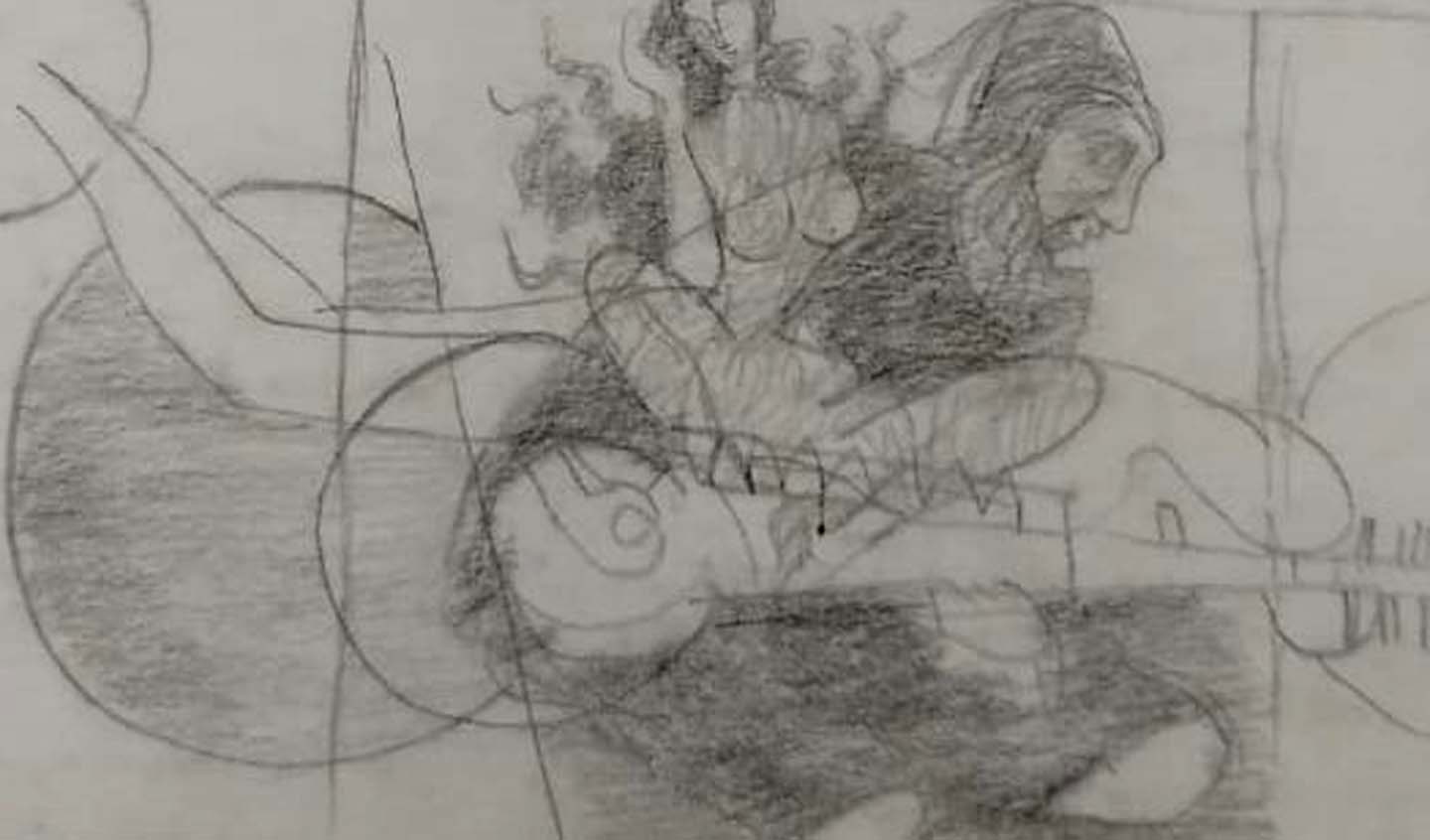
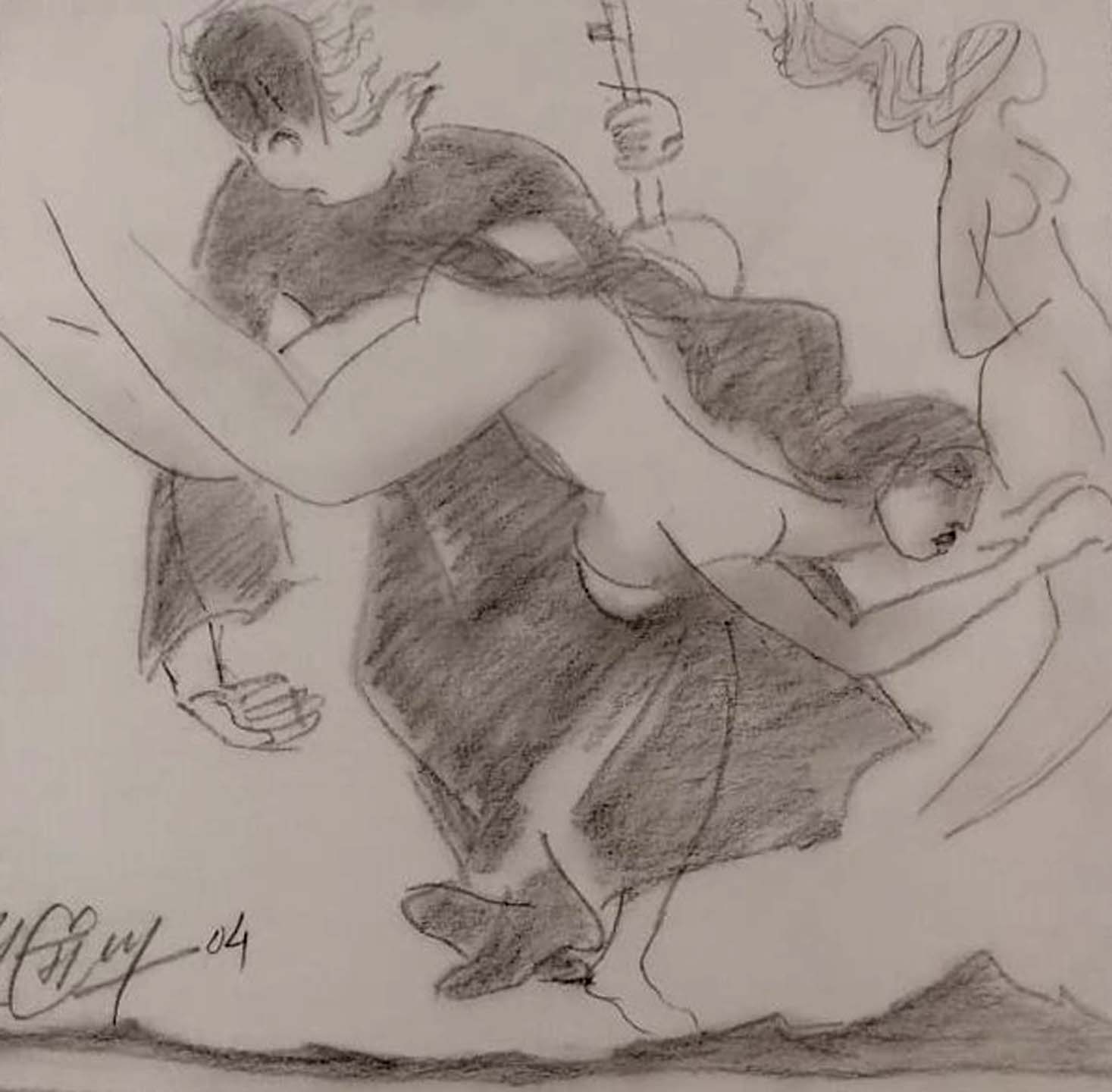
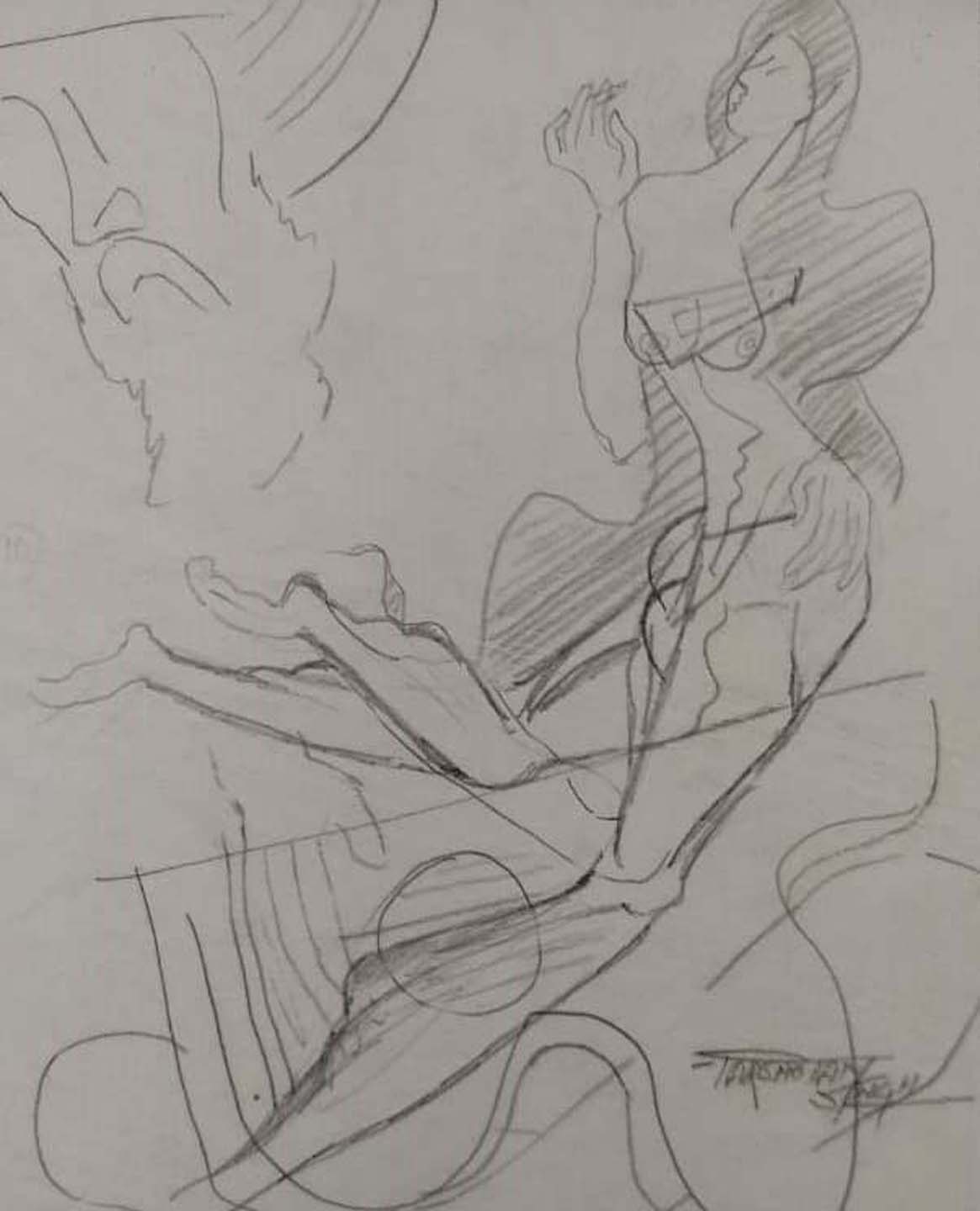
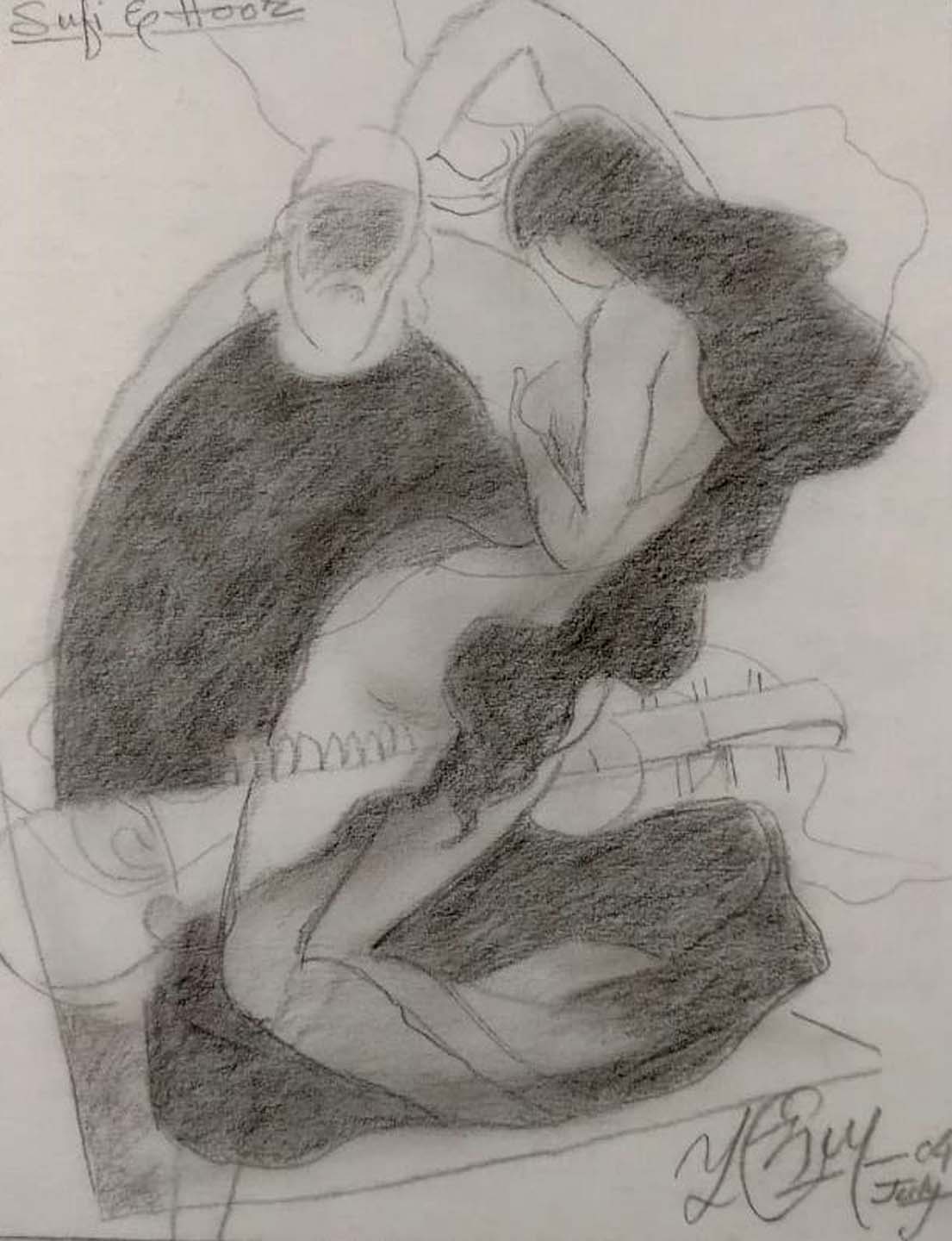
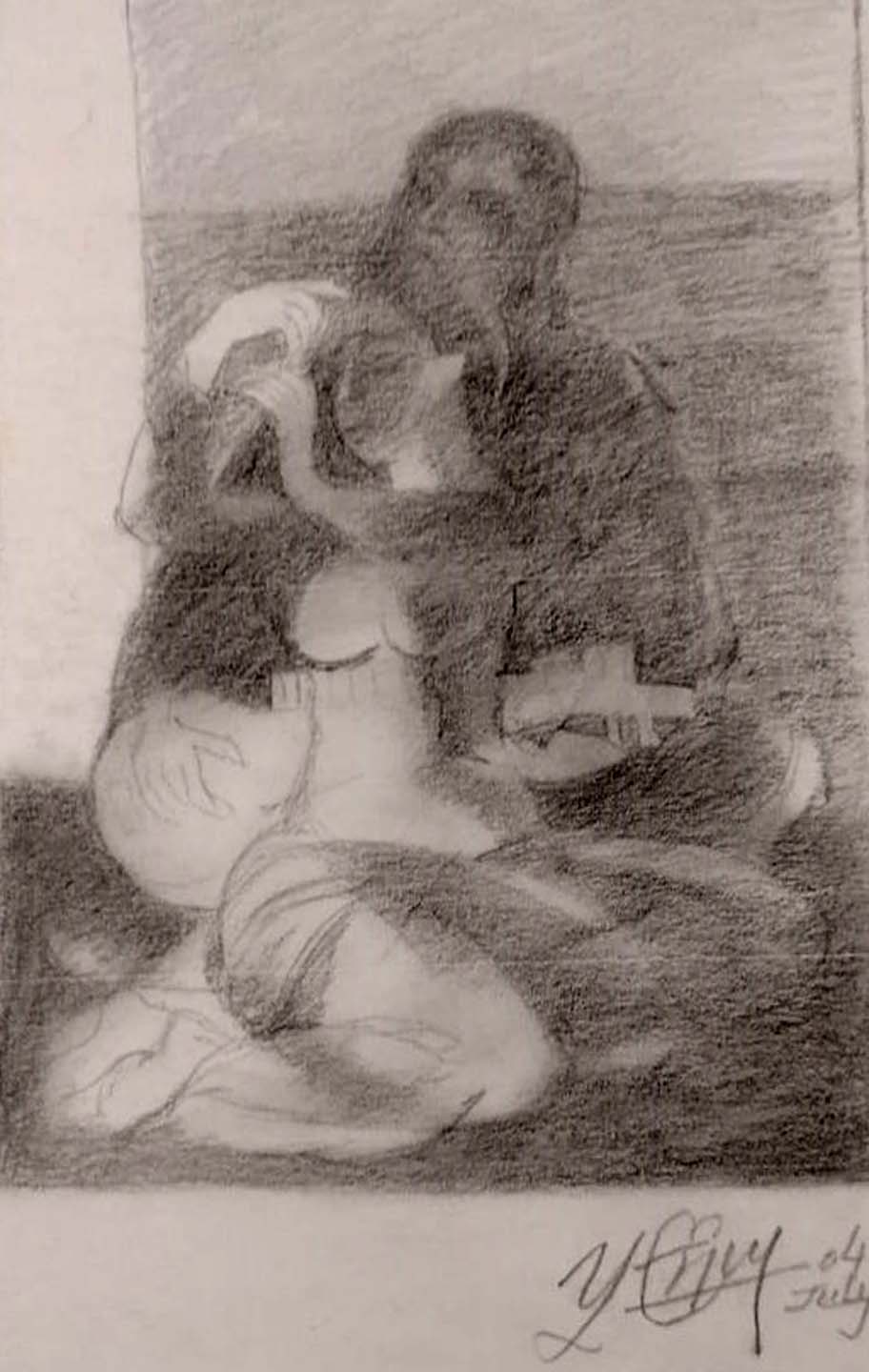
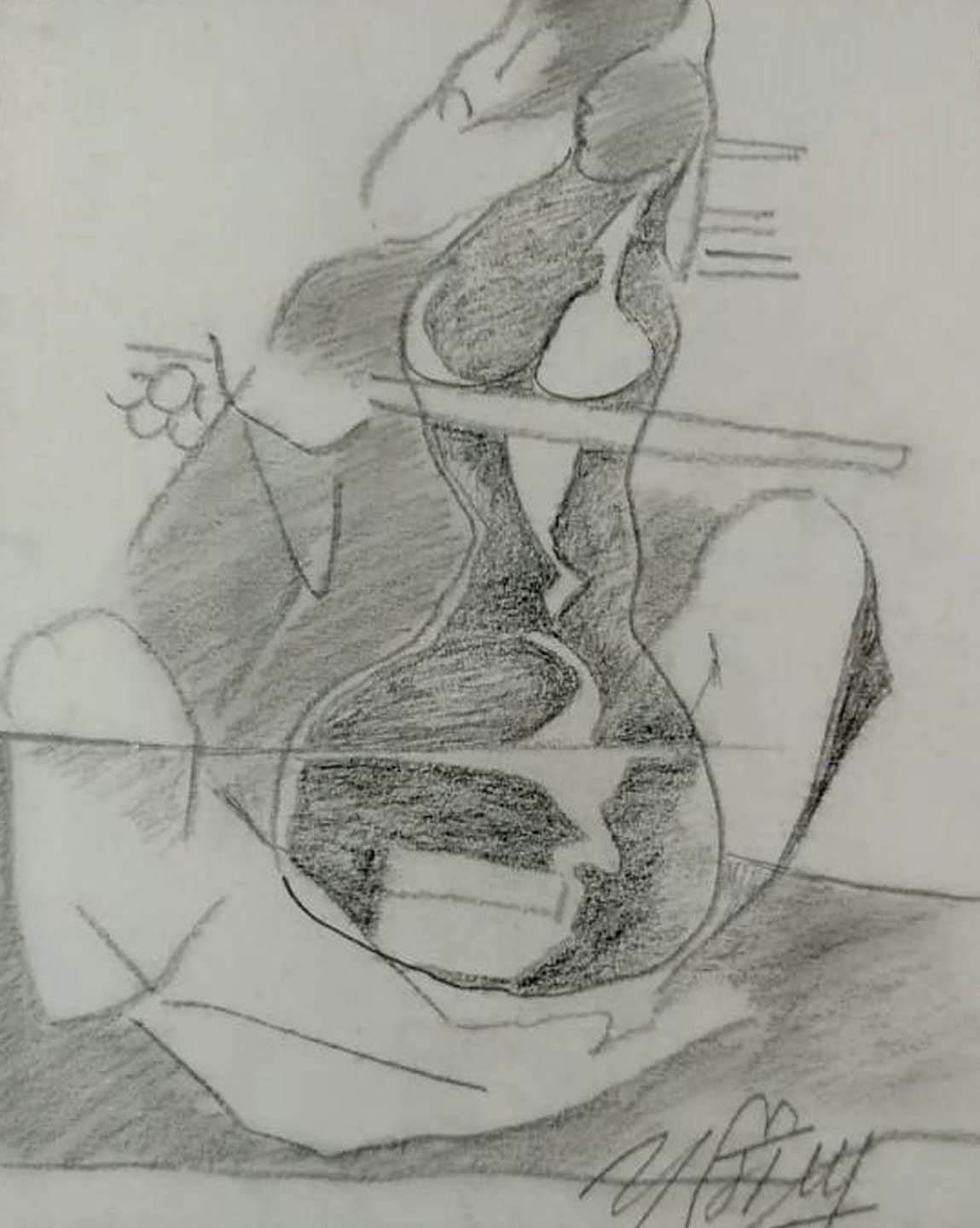
In this artwork, the artist has depicted the melodious and sweet melody of music as a beautiful and gentle sound like a fairy that seems to embrace a Sufi as if he is deeply engrossed in that melodious and sweet melody and is blissful.

Sufism is a mystical religious practice found in Islam, which involves chanting and meditation for spiritual advancement. Followers of Sufism are called “Sufis” and their ultimate goal is to attain the pleasure of God by striving to return to their original state of purity and natural self, known as Fina.
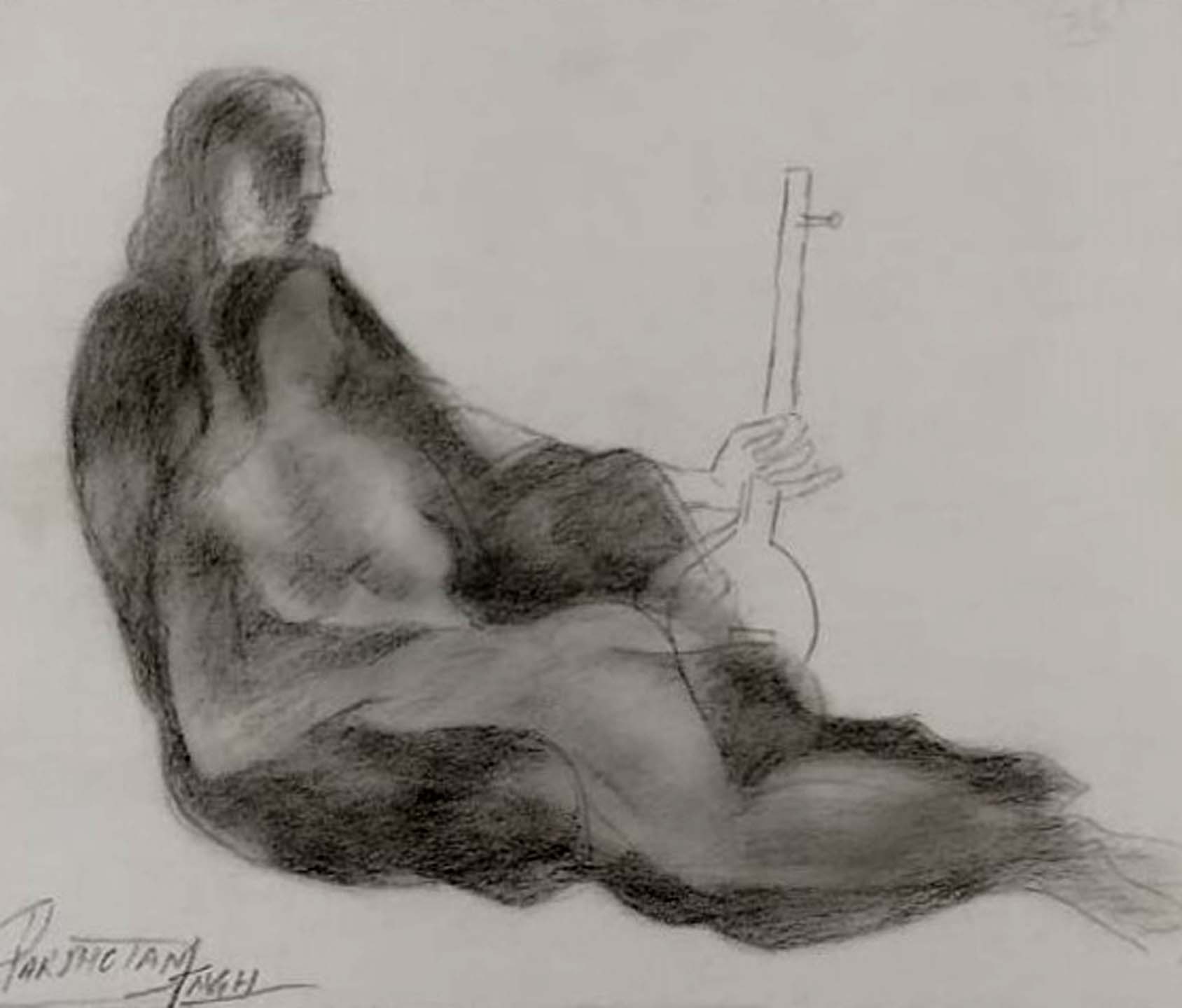
This artwork depicts a Hoor, a Sufi and God. The Sufi is immersed in the depths of the inner being in the melodious and enchanting music of the Rabab, and seeks to merge with the divine in bliss. The outer music is symbolic and is used only for explanation, in fact it is a reference to the inner music, and Hoor is considered the most beautiful, that music is also as beautiful and sweet as the Hoor.In this artwork, the artist has depicted the melodious and sweet melody of music as a beautiful and gentle sound like a fairy that seems to embrace a Sufi as if he is deeply engrossed in that melodious and sweet melody and is blissful.
Sufism is defined as “the internalization and deepening of Islamic belief and practice. “”A Sufi is one who wears the wool over purity.” Sufis believe that by giving the bay’ah (pledge of loyalty) to a legitimate Sufi sheikh, one pledges loyalty to Muhammad; thus, a spiritual connection is established between the seeker and Muhammad. It is through Muhammad that Sufis aim to learn about, understand, and connect with God.
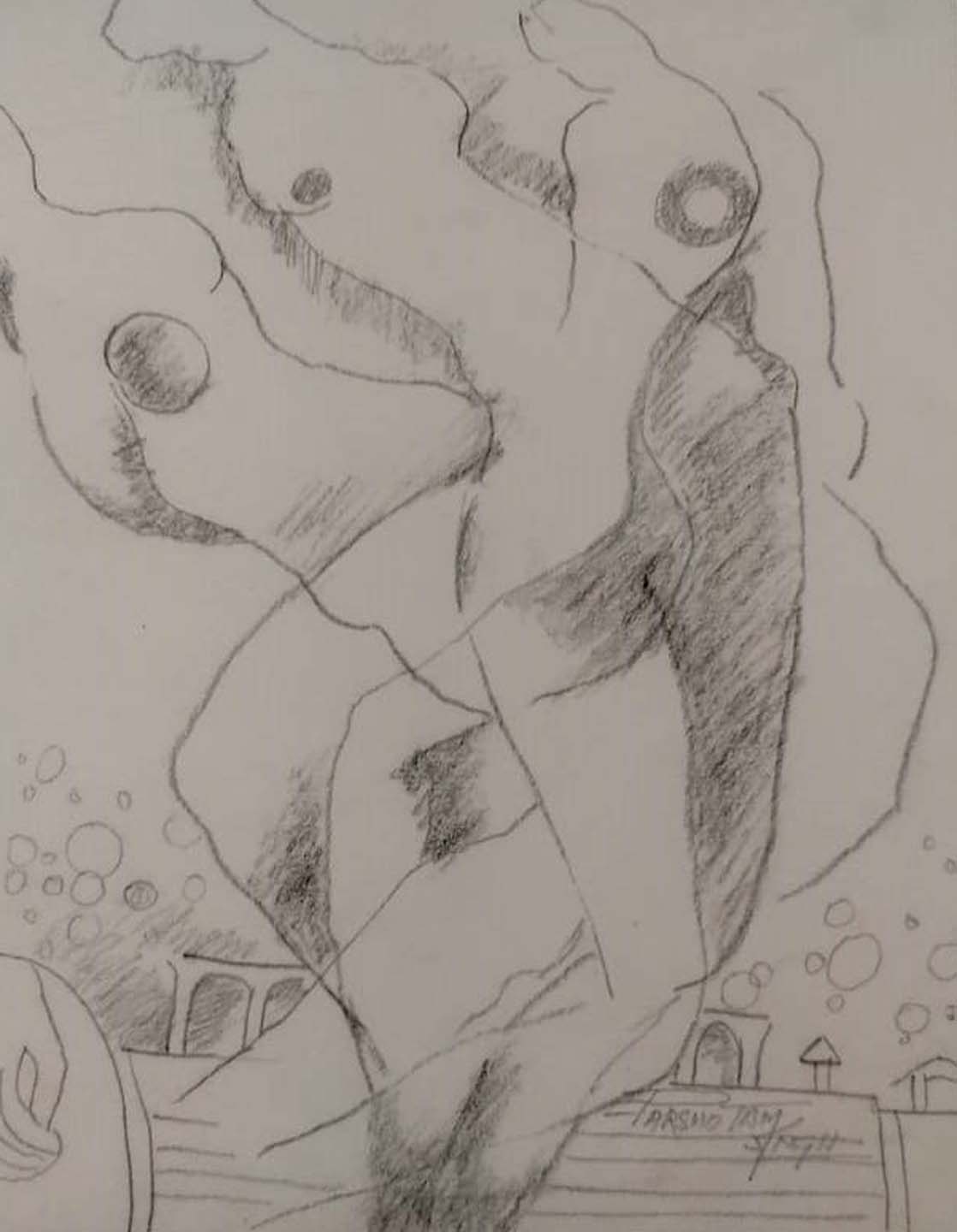
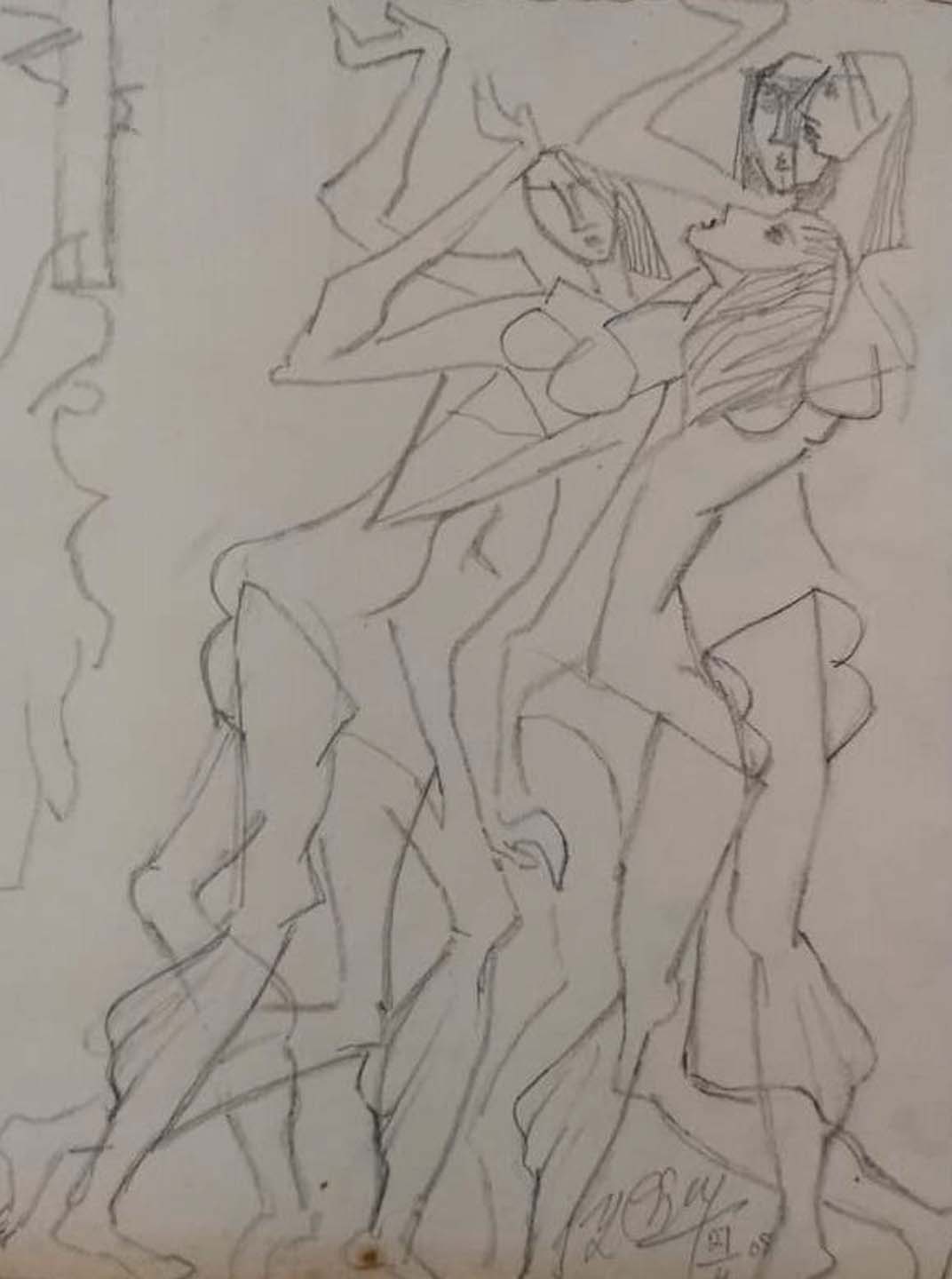
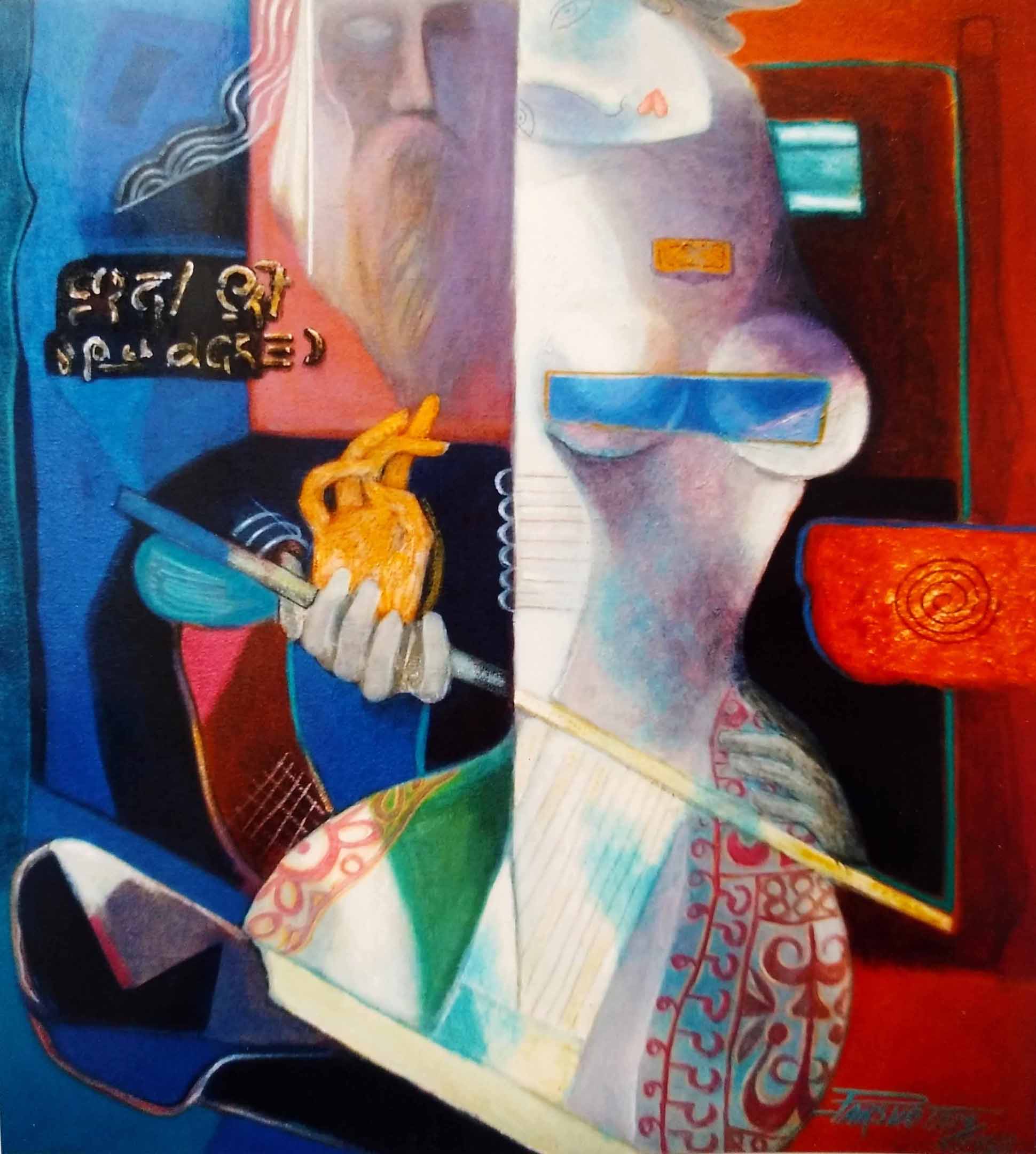
In this artwork of the artist, it seems as if the artist has extracted the essence of his years of artistic penance and presented it to us through colors on the canvas. The faces of the Sufi and the hoor depict infinite tenderness, simplicity and the light of infinite spirituality and are deeply immersed in it. The light of infinite spirituality on the faces of both is clearly visible.

Followers of Sufism believe that in the early stages of its development, the real meaning of Sufism was nothing more than the assimilation of Islam. According to one view, Sufism originated and developed directly from the Quran, which is constantly recited, meditated upon and experienced. Sufism strictly follows the path of Muhammad, through which the heart’s connection with God is strengthened.
In this artwork of the artist, it seems as if the artist has extracted the essence of his years of artistic penance and presented it to us through colors on the canvas. The faces of the Sufi and the hoor depict infinite tenderness, simplicity and the light of infinite spirituality and are deeply immersed in it. The light of infinite spirituality on the faces of both is clearly visible.

Sufism had a long history even before Sufi teachings became institutionalized in devotional sects in the early middle Ages. The term tariqa is used to describe any sector school of Sufism, or more specifically the mystical teachings and spiritual practices of such a school, which aim todiscover the Haqiqah (ultimate truth). The tariqa has a Murshid (guide) who plays the role of leader or spiritual director. Members or followers of the tariqa are called Murids, which means "seeker", that is, "one who desires the knowledge of knowing God and loving God".To depict Sufis in different forms and to carve a Sufi face lit up with radiance on canvas is the mark of a very accomplished artist. One who has seen and felt it. Looking at all the works of the artist, it seems that the artist has seen and felt it very delicately.
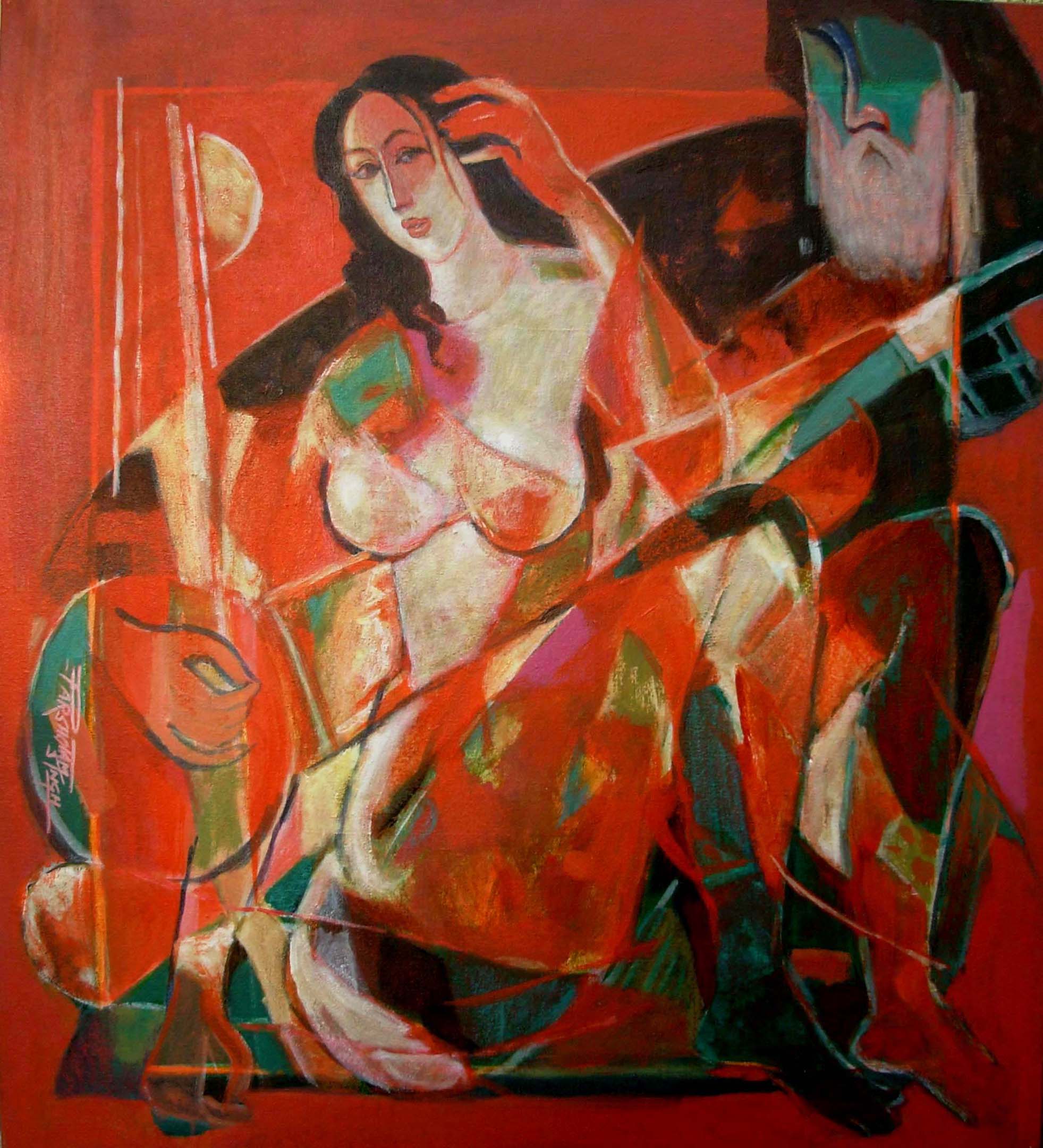
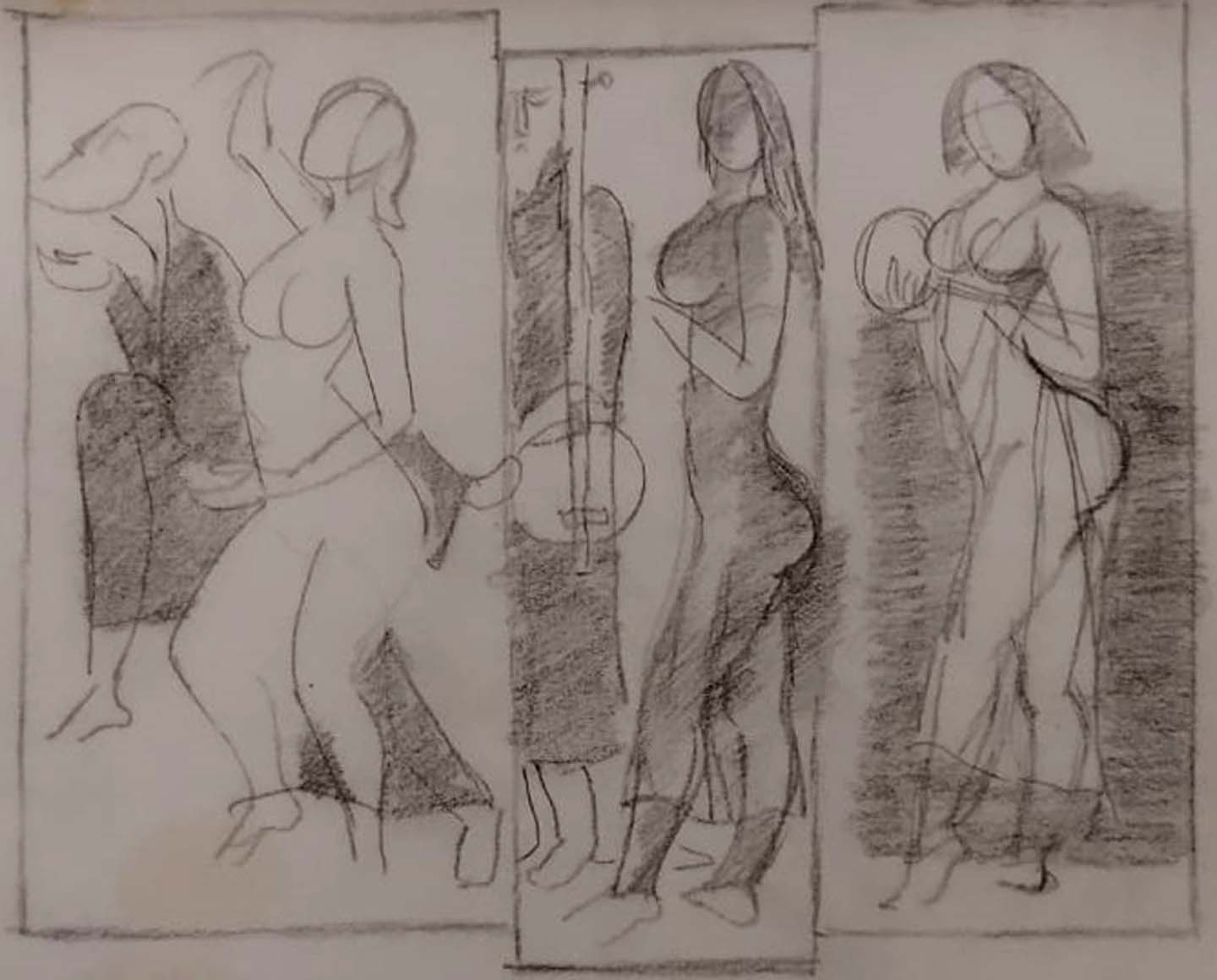
Hoor in Jannat is like Apsara in heaven, that is, a woman who is nowhere else but there. Her beauty is above all, there is no woman more beautiful than her in any world. This beautiful woman present in Jannat is called Hoor in Islam. Thus, the concept of Hoor comes in the Quran as a spiritual metaphor, which depicts the conscious part of the heavenly soul. Showing Hoor prominently is also the concept of the artist. Her beauty, charming personality, is extremely luminous and touch less. The artist has given life to this character on his canvas with great care and passion. Music is a unique medium between Sufi and Hoor which works to unite both. Music is the medium which unites every soul with God.

Sufi and Houri is such a complex subject on which hardly any artist has worked. The nuances of this subject can be understood only by the one who has felt it and known it closely. Purushottam Singh is an artist who knew and understood this subject very well because he himself was in search of that true and eternal abode and God throughout his life and he remained in the company of Puran Kamil Murshid and Saint and kept on practicing it. This is the reason why he made the path of union with God through this inner music his subject and worked on this subject throughout his life. But perhaps it was his misfortune that he could not tell anyone about it openly nor did anyone try to know. In the eyes of galleries and art lovers, his art remained that of an ordinary musician.
I have tried to shed light on this subject and his art with my little understanding, but to what extent I have succeeded, only you will be able to tell correctly.

Parshotam Singh was born in 1933 in Attak, Pakistan. His father worked in the electricity department and was fond of carving wooden furniture. He created beautiful carvings on cupboards, beds, and many other objects, which still remind us of him. Parshotam Singh inherited art from his childhood. He was deeply interested in art. Despite negative attitudes from his family and relatives, he remained committed to art and continued to pursue it. He dedicated his entire life to art. He faced many difficulties and hardships along the way, but he remained steadfast and continued to thrive in the art world.
Coming from a middle-class family, he remained committed to the field of art for 80 years, despite many ups and downs and other challenges. He worked skillfully on a variety of surfaces, demonstrating his artistic prowess. His artistic journey faced many challenging experiences, but he never gave up. He continued to fight against all odds and kept moving forward. He had the privilege of meeting many renowned artists in the art world, such as M.F. Hussain, A.A. Almelkar, Shanti Dave, and others. All of them understood the nuances of his art and encouraged him to keep moving forward.
Parshotam Singh worked on several series, including Musicians, Mountains, Variety of Faces and Expressions, Sufis and Houris, Musicians, and Jugni. His favorite series was the Musician series, which he worked on for a long time, and which brought him fame. He held numerous solo and group art exhibitions in India and abroad, and galleries also sold his work at auction. His art was highly appreciated.
Parshotam Singh was honored with the “Veteran Artist Award” by the All India Arts and Crafts Society. He was associated with the Dhumi Mal Art Gallery, Geeta Art Gallery, Rothman Art Gallery, and Jyoti Art Gallery throughout his life. He was passionate about only two things in life, and he wanted to achieve them. One was art, and the other was union with God. For this, he tirelessly and tirelessly practiced rigorous austerities, following the path of Sant – Mat throughout his life. This is why his works of art, while appearing simple, possessed profound spirituality. Whatever he discovered within himself through that spiritual devotion, he gracefully captured on canvas, following the path of Sant Mat.

Online
Indian Art Studio
Contemporary Art